


How to Choose Wireless DMX Moving Heads: The Complete Buyer's Guide
Introduction
Wireless DMX moving heads have transformed the event lighting industry. Whether you're a professional lighting designer, an event hire company, or a venue owner, choosing the right wireless DMX moving head can make or break your production. This guide walks you through everything you need to know before you buy.
What Is a Wireless DMX Moving Head?
A moving head light is a motorised fixture that can pan and tilt to direct its beam anywhere in a space. When combined with wireless DMX control, you eliminate the need for long DMX data cables — making setup faster, safer, and far more flexible for events of all sizes.
Key Factors to Consider
1. Beam, Wash, or Spot?
Moving heads come in three main types:
- Beam fixtures produce a tight, concentrated ray of light — ideal for aerial effects and dramatic looks.
- Wash fixtures flood a wide area with colour — perfect for stage washing and uplighting large spaces.
- Spot fixtures project sharp, defined patterns (gobos) — great for logos, breakup patterns, and theatrical looks.
Many modern fixtures are hybrid beam/spot/wash units, giving you maximum versatility from a single light.
2. Wireless DMX Protocol
Not all wireless DMX systems are compatible. The most common protocols are:
- W-DMX (Wireless Solution) — widely used, reliable, long range.
- LumenRadio CRMX — industry-standard, excellent interference rejection.
- RDM-capable wireless — allows two-way communication for remote diagnostics.
Always confirm that your wireless transmitter and fixtures share the same protocol before purchasing.
3. Output and Brightness
For outdoor events or large venues, you'll need higher lumen output. Indoor events and smaller venues can get away with more modest fixtures. Look for fixtures with LED sources rated in watts (e.g. 60W, 100W, 200W) and check the lux/lumen specifications at a given distance.
4. Battery vs. Mains Power
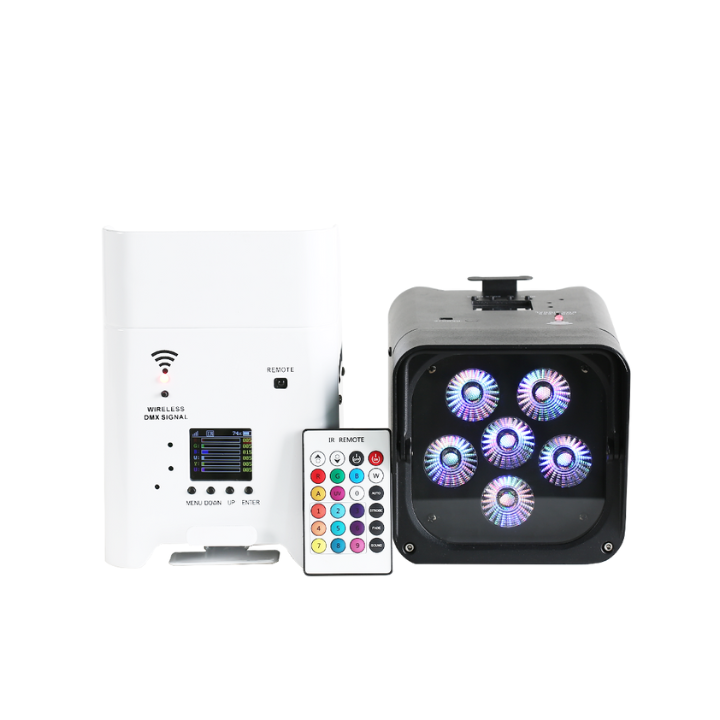
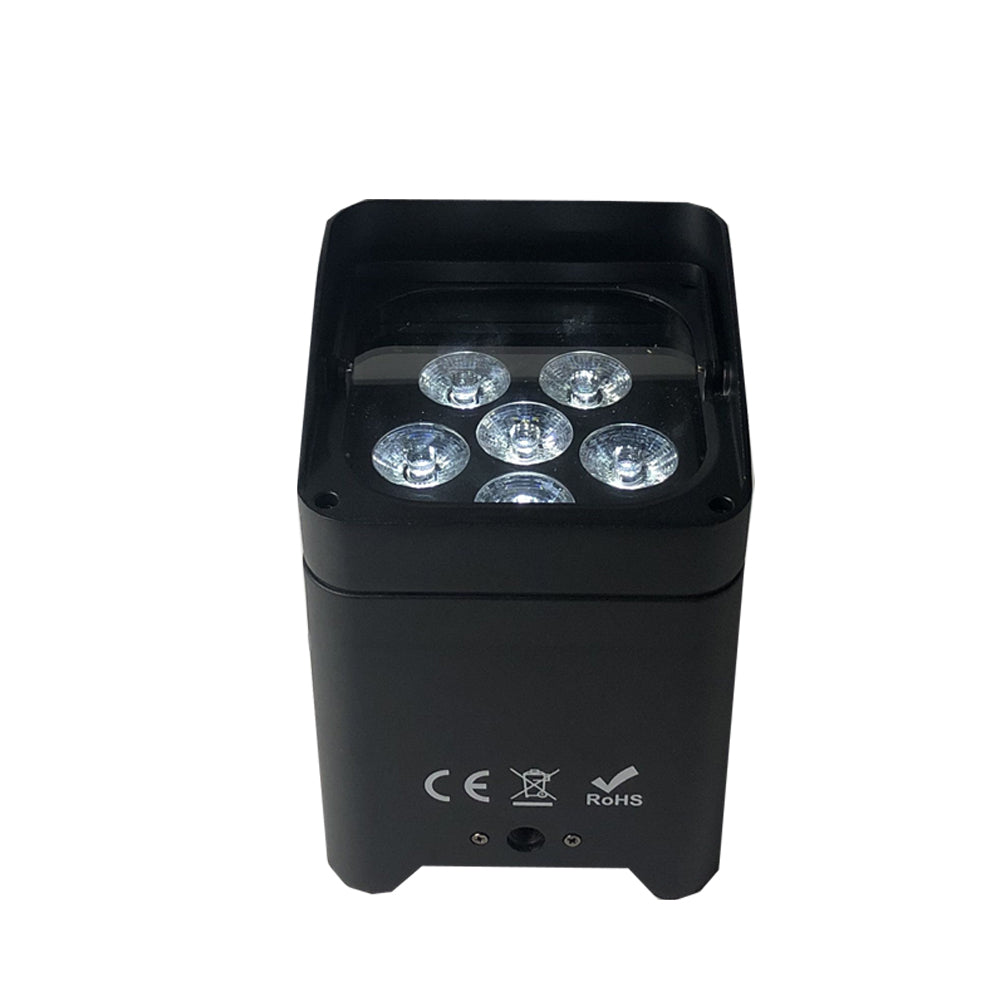
Some wireless moving heads are also battery-powered, making them completely cable-free. These are ideal for:
- Outdoor events with no power access
- Aisle and centrepiece lighting at weddings
- Quick-turnaround event hire setups
Battery-powered units typically offer 6–12 hours of runtime depending on brightness settings.
5. IP Rating for Outdoor Use
If you plan to use moving heads outdoors, check the IP (Ingress Protection) rating. IP65 or higher means the fixture is dust-tight and protected against water jets — suitable for outdoor events in Australian conditions.
6. Pan and Tilt Range
Standard moving heads offer 540° pan and 270° tilt. Some advanced fixtures extend to 630° pan for even greater coverage. More range means more creative flexibility.
7. Colour Mixing
Look for RGBW or RGBWA colour mixing for the widest colour palette. CMY colour mixing (found in higher-end fixtures) offers smoother, more natural colour transitions — preferred for theatrical and broadcast applications.
How Many Do You Need?
A general rule of thumb:
- Small events (up to 100 guests): 4–6 moving heads
- Medium events (100–300 guests): 8–12 moving heads
- Large events and concerts: 16+ moving heads
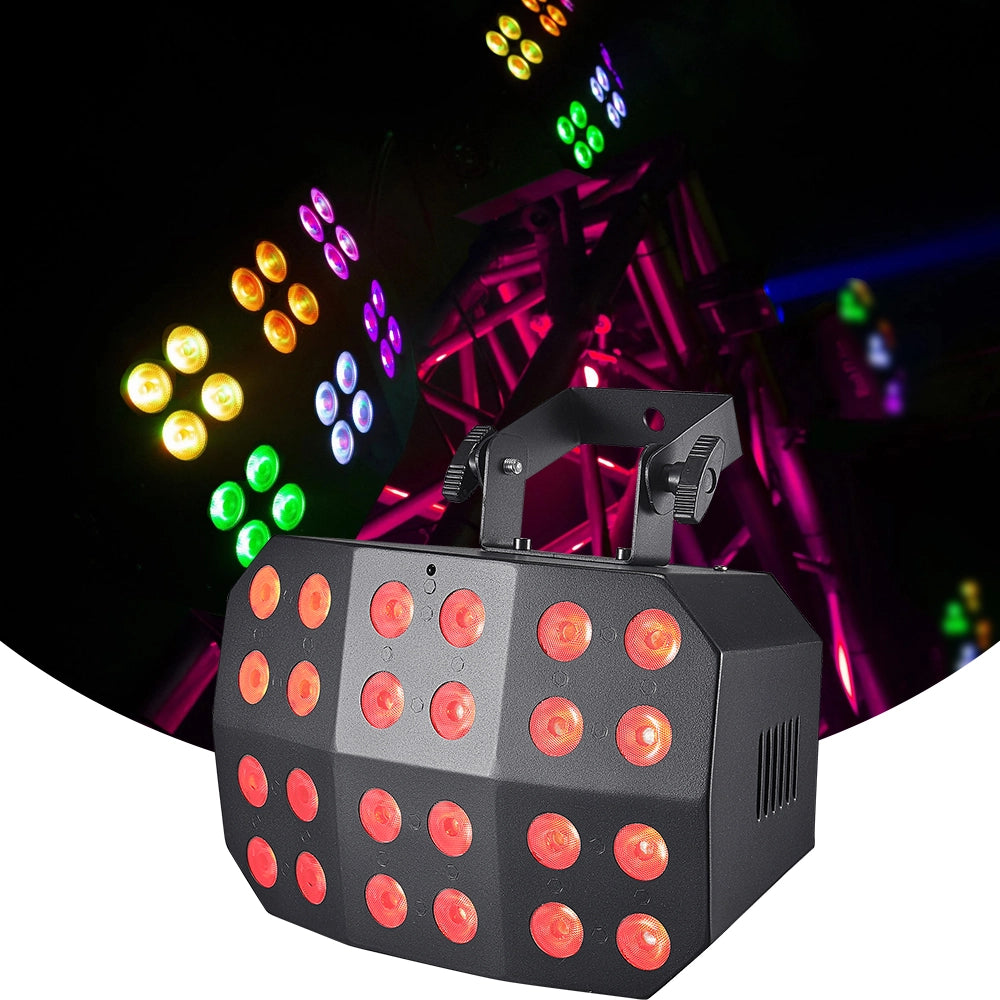
Pairing moving heads with static uplights and effect lights creates a layered, professional look.
Ready to Shop?
Browse our full range of Moving Head Lights — all compatible with wireless DMX control. Need help choosing the right fixture for your event? Contact our team and we'll match you with the perfect setup.
Also explore our Battery-Powered Wireless Uplighting and Special Effects to complete your event lighting package.
Related Posts
